Soul Salt
Sunspringa 26
I don't believe in anything metaphysical. When you die there is oblivion.
That being said, I can appreciate a metaphor about the experience of life and the core of being a human, the soul. So let's imagine souls are real - here is how I think they operate.
The soul is not a single object - I think of it more like a pile of salt sitting in your heart. Heavy salt, like sea salt or rock salt. Salt has a tendency to bond to things or get absorbed by dishes - it is something you have to be a little careful with. It is also technically clear, only becoming opaque from being removed from its true form. It is a crystal, it is beautiful, it is valuable, people used to be paid in salt.
The pile of salt sitting in you was not created at your birth. You are merely a vessel for salt. You hold the salt poured into you by your parents, the salt that sloshed into you through the conflicts and collision in your life, salt tied to the things of the world but sitting opaque in your heart.
A vessel without salt is not conscious. A vessel without salt is dead. You probably have to be literally brain-dead to have no salt. But, through the years, salt sloshes between vessels so much, much is spilled, new salt is generated through friction - no one has even a majority of the same salt they had 5 years ago. Can you say the 10 year old You is still alive? That person, that version of yourself, is dead. You might only have a small portion of what they experienced in your memories. Even less is carried with you on a daily basis in the salt pile. Nevertheless, that salt is mixed into all of the other material you gathered since that time. Despite everything, you are hardly you.
Salt is heavy. But, as it becomes clear, it starts to float in the air in small grains. Then, through a turn and a trick of the light, you can no longer catch the distorted rays coming off clear salt. It has dissappeared into the aether. What remains always is a white pile of opaque, baleful sand. If you can see the salt, it is tied to something on this earth. One of the many earthly spaghettis has easily bonded with it, and separating them is now a monumentus task.
Ego spaghetti. Broken heart spaghetti. I-deserve-that spaghetti. They-deserved-that spaghetti. Identity spaghetti. I'm not ready to go spaghetti. Perfect spaghetti. Getting famous spaghetti. White supremacy spaghetti. Blood money spaghetti. Blood land spaghetti. Inheritance spaghetti. Need spaghetti.
Do you feel your fist tighten? The more you tighten your grip, the more will slip through your fingers and stay on this earth. Your ego, another person's problem. Salt that will pass from person to person, an opportunity to heal for which you cannot cast a recall. Don't stoke your saviour ego on trying to claw it back.
There are four paths.
1. Live your life freely and take on as much salt as you please until it kills you and spills the damage onto everyone you love.
2. Live a sheltered and cyclical life, preserving the little salt you start with but being unable to process it - always in danger of an influx of life.
3. Live the life of an ascetic - find a way to be at peace alone, processing only your salt, and hope that you didn't inherit too much.
4. Grow and take on more and more salt, creating a greater capacity to clear salt and help others on the path.
Only the 4th path is true in a post-industrial world.
In the past, there was a point where salt was all created by small bands of people, and it could be overcome together by a wise culture. The industrial revolution created the ability to bash humanity together on a mechanical scale, creating impossible levels of bonded salt. Colonialism, white supremacy, global capital - it will take generations to process the mountains of salt being created every day. It needs to be done. There is no peace - with the world, the self, existence - without freeing the salt that ties us to the earth.
Your salt is your responsibility. The work is hard, the cause is long. You will trade salt with many others, painfully, hopefully, misguidedly. But it is the life's work. Take the suffering of the world, the silence of abuse, the sword of harm, and remove it from the soul, piece by piece. Let the salt go.
That being said, I can appreciate a metaphor about the experience of life and the core of being a human, the soul. So let's imagine souls are real - here is how I think they operate.
The soul is not a single object - I think of it more like a pile of salt sitting in your heart. Heavy salt, like sea salt or rock salt. Salt has a tendency to bond to things or get absorbed by dishes - it is something you have to be a little careful with. It is also technically clear, only becoming opaque from being removed from its true form. It is a crystal, it is beautiful, it is valuable, people used to be paid in salt.
The pile of salt sitting in you was not created at your birth. You are merely a vessel for salt. You hold the salt poured into you by your parents, the salt that sloshed into you through the conflicts and collision in your life, salt tied to the things of the world but sitting opaque in your heart.
A vessel without salt is not conscious. A vessel without salt is dead. You probably have to be literally brain-dead to have no salt. But, through the years, salt sloshes between vessels so much, much is spilled, new salt is generated through friction - no one has even a majority of the same salt they had 5 years ago. Can you say the 10 year old You is still alive? That person, that version of yourself, is dead. You might only have a small portion of what they experienced in your memories. Even less is carried with you on a daily basis in the salt pile. Nevertheless, that salt is mixed into all of the other material you gathered since that time. Despite everything, you are hardly you.
Salt is heavy. But, as it becomes clear, it starts to float in the air in small grains. Then, through a turn and a trick of the light, you can no longer catch the distorted rays coming off clear salt. It has dissappeared into the aether. What remains always is a white pile of opaque, baleful sand. If you can see the salt, it is tied to something on this earth. One of the many earthly spaghettis has easily bonded with it, and separating them is now a monumentus task.
Ego spaghetti. Broken heart spaghetti. I-deserve-that spaghetti. They-deserved-that spaghetti. Identity spaghetti. I'm not ready to go spaghetti. Perfect spaghetti. Getting famous spaghetti. White supremacy spaghetti. Blood money spaghetti. Blood land spaghetti. Inheritance spaghetti. Need spaghetti.
Do you feel your fist tighten? The more you tighten your grip, the more will slip through your fingers and stay on this earth. Your ego, another person's problem. Salt that will pass from person to person, an opportunity to heal for which you cannot cast a recall. Don't stoke your saviour ego on trying to claw it back.
There are four paths.
1. Live your life freely and take on as much salt as you please until it kills you and spills the damage onto everyone you love.
2. Live a sheltered and cyclical life, preserving the little salt you start with but being unable to process it - always in danger of an influx of life.
3. Live the life of an ascetic - find a way to be at peace alone, processing only your salt, and hope that you didn't inherit too much.
4. Grow and take on more and more salt, creating a greater capacity to clear salt and help others on the path.
Only the 4th path is true in a post-industrial world.
In the past, there was a point where salt was all created by small bands of people, and it could be overcome together by a wise culture. The industrial revolution created the ability to bash humanity together on a mechanical scale, creating impossible levels of bonded salt. Colonialism, white supremacy, global capital - it will take generations to process the mountains of salt being created every day. It needs to be done. There is no peace - with the world, the self, existence - without freeing the salt that ties us to the earth.
Your salt is your responsibility. The work is hard, the cause is long. You will trade salt with many others, painfully, hopefully, misguidedly. But it is the life's work. Take the suffering of the world, the silence of abuse, the sword of harm, and remove it from the soul, piece by piece. Let the salt go.
Hamter
Newsong 26
Imagine a hamster living in a cage. It has a spinning wheel, a bunch of kibble, a dome, wood chips to pee on, etc. Funny squeaky hamster! It goes about the day running around and doing whatever it feels like. Sometimes it needs to sleep or eat or run on the treadmill even when it doesn't want to.
You notice the cage is a little weird. All of the walls are solid glass - you can tell that you can look in at the hamster, but it can't look at you! Above the hamster, the ceiling is different. It is a flat metal plate. How solid and impenetrable. If you pay attention to the ceiling, it is slowly lowering. You can only tell when you are paying attention, but it is certainly noticable. The hamster knows too. It looks up now and again with its little caviar eyes almost popping of its head. It knows that at some point, the ceiling will touch the floor, and the only path there is through hamster flesh.
The ceiling progresses down.
The hamster spends time between looking at the ceiling with concern and getting on with its day.
The ceiling progresses down.
The hamster starts spending more time distracting itself from the ceiling.
The ceiling progresses down.
The hamster switches and starts really paying attention to the ceiling, crying out in panic. There is nothing you can do.
The ceiling progresses down.
The hamster wheel is the first thing bent and then popped over by the metal plate. No more exercise. That is OK.
The ceiling progresses down.
The sleeping dome of the hamster is cracked and dented. As a result, it is harder to sleep. Creaking plastic is part of the hamster's dreams.
The ceiling progresses down.
The ceiling always progresses down. It is low enough that the hamster is barely able to get around.
At some point, the ceiling does reach the floor. In that process, the hamster is flattened down to the thickeness of an atom, and then thinned out of reality.
Pretty rough right? Pretty hard to think about this hamster, like wow that is scary. How sad. Painful. Crushed to nothingness. At least it is fake and I don't have to think about it anymore. Right?
THE HAMSTER IS YOU, DIPSHIT!!!!
You notice the cage is a little weird. All of the walls are solid glass - you can tell that you can look in at the hamster, but it can't look at you! Above the hamster, the ceiling is different. It is a flat metal plate. How solid and impenetrable. If you pay attention to the ceiling, it is slowly lowering. You can only tell when you are paying attention, but it is certainly noticable. The hamster knows too. It looks up now and again with its little caviar eyes almost popping of its head. It knows that at some point, the ceiling will touch the floor, and the only path there is through hamster flesh.
The ceiling progresses down.
The hamster spends time between looking at the ceiling with concern and getting on with its day.
The ceiling progresses down.
The hamster starts spending more time distracting itself from the ceiling.
The ceiling progresses down.
The hamster switches and starts really paying attention to the ceiling, crying out in panic. There is nothing you can do.
The ceiling progresses down.
The hamster wheel is the first thing bent and then popped over by the metal plate. No more exercise. That is OK.
The ceiling progresses down.
The sleeping dome of the hamster is cracked and dented. As a result, it is harder to sleep. Creaking plastic is part of the hamster's dreams.
The ceiling progresses down.
The ceiling always progresses down. It is low enough that the hamster is barely able to get around.
At some point, the ceiling does reach the floor. In that process, the hamster is flattened down to the thickeness of an atom, and then thinned out of reality.
Pretty rough right? Pretty hard to think about this hamster, like wow that is scary. How sad. Painful. Crushed to nothingness. At least it is fake and I don't have to think about it anymore. Right?
THE HAMSTER IS YOU, DIPSHIT!!!!
Funeral Speech for Dad
Dormancy 26
Dad was known for his hobby of genealogy, and so I would like to honor that with a few words on the McMinn name.
A long, long time ago the McMinns, or likely Mac Meinnes at the time, were Gaelic Scots. Back in the day, Scotland was being threatened by the powerful English invaders, and made to live as second-class citizens in their own lands. But the Scots were also offered a deal - move to Ireland, and you'll get some land and be rulers just like the English! One unnamed Mac Meinne got tired of the fight and took them up on that deal, moving us to Ireland near Belfast.
You can imagine how long that deal lasted - Not Long.
By the time of the famine, the Scots and Irish were starting to be treated similar by the English, who were building their manors in the North and exporting all of the food. A McMinn you may have heard of, Samuel, survived the English starvation and took a terrible ship ride to the United States. He left behind his Gaelic home and came to a land that had also been taken over by the English, but was aplenty with food. Our tradition of corned beef comes from this time, as corned beef was a rare treat in Ireland but a cheap cut here after the migration.
At some point between Samuel and the Williams, we stopped being Irish or Scottish. Someone probably figured that we had enough experience going places that we weren't welcome, so that side of the family could just become white Americans like the Godshall line had a hundred or so years prior. There is a grief that comes with giving up culture to be more palatable. I think this grief tends to stick around until it is resolved.
Around the time Gramma Godshall was ill, I spoke with my Dad one-on-one, likely on our annual walk at the beach. As we stole a few minutes away from the busy vacation, he told me about his childhood home life. Back then, it was really hard for his parents to say "I Love You" to him. It was never direct, and rarely out loud.
I suspect this odd family culture of not saying "I Love You" happened somewhere during the change from scottish to white American, maybe when we first started speaking English and lost our gaelic words for love. Perhaps Slainte, to health, is the closest term we have left.
On this walk Dad told me it took a lot of internal work to start saying "I love you" to his mom regularly. She only just started saying it back to him in her last decade. It's one of the last things Gramma said to Dad, and in turn one of the last things he said to me only a few weeks ago.
Every time I am able to say "I love you" to my friends, I know that it was thanks in part to the work Dad did to heal a small piece of grief in the McMinn story. And I think in the grander genealogy of our next generations, whatever that looks like, Dad will have an equal weight to Mac Meinne and Samuel for being the first to openly say:
"I Love You."
So: Slainte Dad, I love you too.
Of all the money that e'er I had
I have spent it in good company
Oh and all the harm I've ever done
Alas, it was to none but me
And all I've done for want of wit
To memory now I can't recall
So fill to me the parting glass
Good night and joy be to you all
A long, long time ago the McMinns, or likely Mac Meinnes at the time, were Gaelic Scots. Back in the day, Scotland was being threatened by the powerful English invaders, and made to live as second-class citizens in their own lands. But the Scots were also offered a deal - move to Ireland, and you'll get some land and be rulers just like the English! One unnamed Mac Meinne got tired of the fight and took them up on that deal, moving us to Ireland near Belfast.
You can imagine how long that deal lasted - Not Long.
By the time of the famine, the Scots and Irish were starting to be treated similar by the English, who were building their manors in the North and exporting all of the food. A McMinn you may have heard of, Samuel, survived the English starvation and took a terrible ship ride to the United States. He left behind his Gaelic home and came to a land that had also been taken over by the English, but was aplenty with food. Our tradition of corned beef comes from this time, as corned beef was a rare treat in Ireland but a cheap cut here after the migration.
At some point between Samuel and the Williams, we stopped being Irish or Scottish. Someone probably figured that we had enough experience going places that we weren't welcome, so that side of the family could just become white Americans like the Godshall line had a hundred or so years prior. There is a grief that comes with giving up culture to be more palatable. I think this grief tends to stick around until it is resolved.
Around the time Gramma Godshall was ill, I spoke with my Dad one-on-one, likely on our annual walk at the beach. As we stole a few minutes away from the busy vacation, he told me about his childhood home life. Back then, it was really hard for his parents to say "I Love You" to him. It was never direct, and rarely out loud.
I suspect this odd family culture of not saying "I Love You" happened somewhere during the change from scottish to white American, maybe when we first started speaking English and lost our gaelic words for love. Perhaps Slainte, to health, is the closest term we have left.
On this walk Dad told me it took a lot of internal work to start saying "I love you" to his mom regularly. She only just started saying it back to him in her last decade. It's one of the last things Gramma said to Dad, and in turn one of the last things he said to me only a few weeks ago.
Every time I am able to say "I love you" to my friends, I know that it was thanks in part to the work Dad did to heal a small piece of grief in the McMinn story. And I think in the grander genealogy of our next generations, whatever that looks like, Dad will have an equal weight to Mac Meinne and Samuel for being the first to openly say:
"I Love You."
So: Slainte Dad, I love you too.
Of all the money that e'er I had
I have spent it in good company
Oh and all the harm I've ever done
Alas, it was to none but me
And all I've done for want of wit
To memory now I can't recall
So fill to me the parting glass
Good night and joy be to you all
The Shadow of Responsibility is Control
Hearth 25
Ok, so probably predictably after the last post, the next step for me was to immediately white woman my sense of "responsibility" into the DIY music scene. Tip for any other white trans people: don't do that.
If you are curious, I did the white-woman-button move of judging another person with less privilege and used that judgement to try to control the space we were both in. I took a personal issue and turned it into a professional/power issue where I could use power to protect my own ego at the expense of access for the other artist. This is also known as a disposability mentality, a core tenant of anti-Blackness. While these things can't be undone, luckily I was able to make decent amends.
To get over whiteness is to give up the sense of control - over what other people do, over the spaces you are in, and over your reputation/image. The truth is, other people will do things that you don't like, that people you like don't like, that even cause personal harm to other people. Personal disputes are not your problem - that is why they are personal! The people involved have the full capacity to make their own judgements about a person without my ham-sandwich mouth opening.
Caring about image - isn't that just the core hypocrisy of "punks?" The ethos is fully expressing the right opinions or what have you with a "fuck you" attitude - those who have done the real work just simply show up the right way and the results are seen in the material changes that result from their presence. Never doing things "because it is the right thing" but because it is the only thing to do.
I highly recommend listening to Mr. Morale and the Big Steppers like 50 times if you need to get this into your head. American culture is very image-driven, but reality is day to day. The only thing that matters is how you show up in your personal relationships and spaces, where the stakes and conversations are frankly at a lower and more complex frequency than the sphere of the web. Keep your head down and do the work.
If you are curious, I did the white-woman-button move of judging another person with less privilege and used that judgement to try to control the space we were both in. I took a personal issue and turned it into a professional/power issue where I could use power to protect my own ego at the expense of access for the other artist. This is also known as a disposability mentality, a core tenant of anti-Blackness. While these things can't be undone, luckily I was able to make decent amends.
To get over whiteness is to give up the sense of control - over what other people do, over the spaces you are in, and over your reputation/image. The truth is, other people will do things that you don't like, that people you like don't like, that even cause personal harm to other people. Personal disputes are not your problem - that is why they are personal! The people involved have the full capacity to make their own judgements about a person without my ham-sandwich mouth opening.
Caring about image - isn't that just the core hypocrisy of "punks?" The ethos is fully expressing the right opinions or what have you with a "fuck you" attitude - those who have done the real work just simply show up the right way and the results are seen in the material changes that result from their presence. Never doing things "because it is the right thing" but because it is the only thing to do.
I highly recommend listening to Mr. Morale and the Big Steppers like 50 times if you need to get this into your head. American culture is very image-driven, but reality is day to day. The only thing that matters is how you show up in your personal relationships and spaces, where the stakes and conversations are frankly at a lower and more complex frequency than the sphere of the web. Keep your head down and do the work.
A Conversion
Fairtide 25
Paganism kinda sucks. As a recently christian person, I want to find a home in an existing religious structure – ideally, one connected to a religious community and rituals. But looking into what’s available, I don’t want to be a sage-burning Wiccan or a worshipper of binary-sex gods. I don’t want to be someone who pretends to be an ancient adherent of their ethnic religion or worse – someone else’s ethnic religion. I left Christianity because of its structural connections to colonialism, both here on Turtle Island and in Palestine. I don’t want to play that game by a different name.
Why do attempts at religion by (particularly white) people who left Christianity always suck? No doubt in part because of the “loss of indigeneity” that white communities have agreed to during the creation of race and colonialism. Christianity has the only bit of pre-colonial “spiritual juice” left to whiteness. Outside of that, white people are left to try to imagine a religion from before colonialism – through ethnic paganism like Druidry – or poorly steal stuff from current indigenous groups. The latter is an easy move for a people who have been conditioned to the normalcy of stealing from the indigenous.
I think it is the method of spirituality, rather than the content of spirituality, that must be payed attention for any post-christian person to create a new sense of spirituality. We need to trust our own experiences over the structures of hegemony that we are so heavily bathed in. (This task is more difficult for white people because it requires unlearning a lot of white beliefs and "instincts".) I have found a good way to do this is to zoom out and think about the patterns I already have in my life. All humans find something to place their beliefs, morals, rituals, and understanding of mortality in. I just have to review where mine are.
So, what acts as a religion in my life? Where do I go to meet friends and strangers, to talk about issues of justice, feelings, and sentiment? Where do I feel a connection to other people through different rituals and sayings? Where do I keep to a relatively regular calendar of events?
DIY music!
I think I can confidently say that my religion is DIY music - as a neutral statement. My bandmates and I have joked about it, but I think it should be a serious consideration. Going to shows, wearing patches and prints, non-judgemental spacekeeping, respecting the sober, etc – all religious practices I am well-accustomed to. (Well, except patches. I have tried patching so many times – stamp printing comes way more naturally to me).
Recognizing this, I need to treat the DIY spaces here as sacred - that is, requiring the highest care of social spacemaking. I need to think carefully and act decisively to make these spaces inclusive, safe, and just. So, stay tuned as I process my thoughts on the local scene and the spaces I have responsibilities in.
Why do attempts at religion by (particularly white) people who left Christianity always suck? No doubt in part because of the “loss of indigeneity” that white communities have agreed to during the creation of race and colonialism. Christianity has the only bit of pre-colonial “spiritual juice” left to whiteness. Outside of that, white people are left to try to imagine a religion from before colonialism – through ethnic paganism like Druidry – or poorly steal stuff from current indigenous groups. The latter is an easy move for a people who have been conditioned to the normalcy of stealing from the indigenous.
I think it is the method of spirituality, rather than the content of spirituality, that must be payed attention for any post-christian person to create a new sense of spirituality. We need to trust our own experiences over the structures of hegemony that we are so heavily bathed in. (This task is more difficult for white people because it requires unlearning a lot of white beliefs and "instincts".) I have found a good way to do this is to zoom out and think about the patterns I already have in my life. All humans find something to place their beliefs, morals, rituals, and understanding of mortality in. I just have to review where mine are.
So, what acts as a religion in my life? Where do I go to meet friends and strangers, to talk about issues of justice, feelings, and sentiment? Where do I feel a connection to other people through different rituals and sayings? Where do I keep to a relatively regular calendar of events?
DIY music!
I think I can confidently say that my religion is DIY music - as a neutral statement. My bandmates and I have joked about it, but I think it should be a serious consideration. Going to shows, wearing patches and prints, non-judgemental spacekeeping, respecting the sober, etc – all religious practices I am well-accustomed to. (Well, except patches. I have tried patching so many times – stamp printing comes way more naturally to me).
Recognizing this, I need to treat the DIY spaces here as sacred - that is, requiring the highest care of social spacemaking. I need to think carefully and act decisively to make these spaces inclusive, safe, and just. So, stay tuned as I process my thoughts on the local scene and the spaces I have responsibilities in.
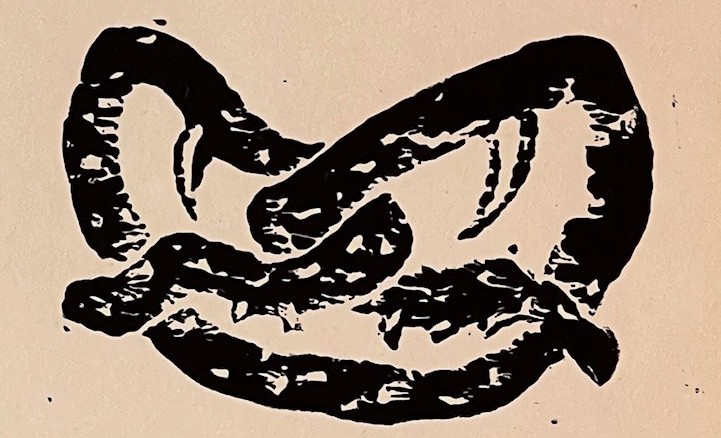
Altar Thoughts
Pagan altars also leave something to be desired. An altar of sage, wood rods, and cheap metal pentagrams just sounds like an Amazon shopping cart rather than a spiritual space to me.
If I were to put together an altar for myself, it might have some things from my local folk punk music scene. It would also have objects that I feel a spiritual and personal connection to. It would take a Sentimental Materialism to construct – a look at my actual experiences and the gathering of many meaningful things to me that I put in one place.
If I were to put together an altar for myself, it might have some things from my local folk punk music scene. It would also have objects that I feel a spiritual and personal connection to. It would take a Sentimental Materialism to construct – a look at my actual experiences and the gathering of many meaningful things to me that I put in one place.
About Me
I am stupid
This user live edits
This user live edits
Demograph
Demographics are important in many contexts when discussing cultural topics. I list mine here so that people know what perspective I am coming from! Based on the Wheel of Privilege.
Race: white (USA)
Actual Cultures: Italiana, Gaelic/Scots, Diyer
Location: Imperial Core
Citizenship: Citizen
Gender: Trans Nonbinary
Pronouns: they/them
Sexuality: Bi & Monog
Age: Late 20s
Body: Mostly Able, Mobile, Kummerspeck
Language: English
Education: College
Class: Salaried Middle Class Renter
Mental: Illinois
Check out my band!